What AI readiness actually looks like in an SME
· By Peter Lowe
Category: Readiness
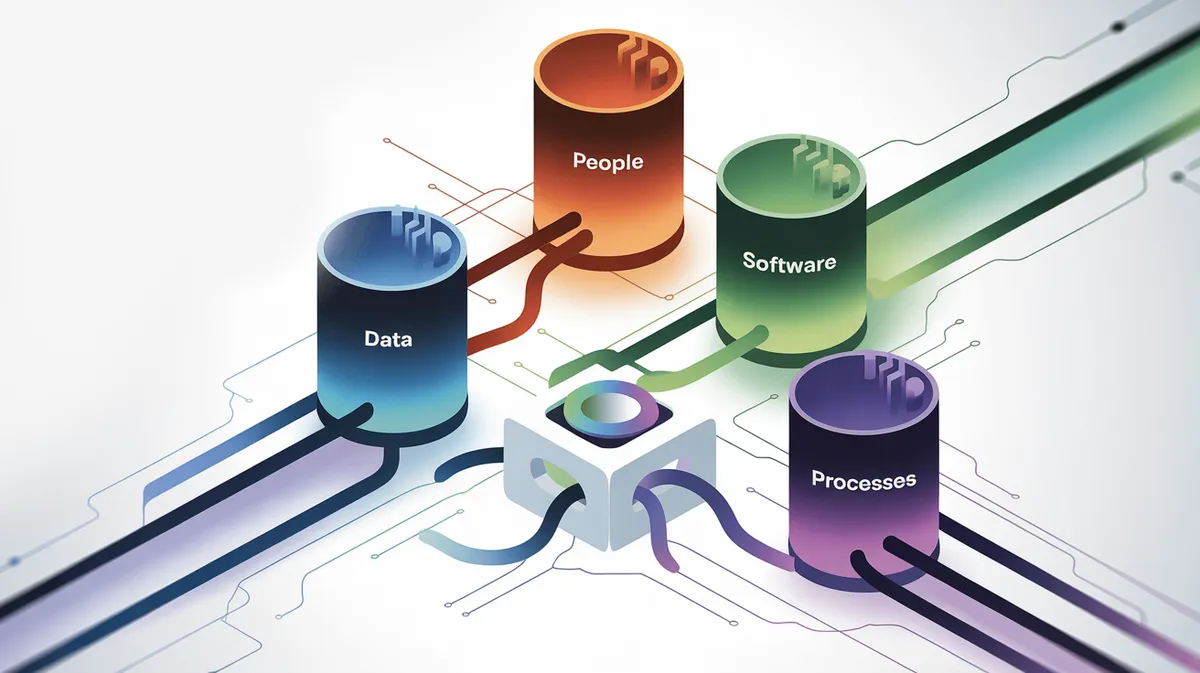
Most AI readiness frameworks are built for enterprises with dedicated teams and million-pound budgets. They talk about data lakes, MLOps platforms, and centre of excellence teams.Here's what it actually looks like when you're a consultancy trying to work out if AI can help.The real readiness questionsForget the enterprise frameworks. Here are the questions that actually matter:1. Do you know what your team spends time on?Not theoretically. Actually. Can you list the top 10 repeated tasks that eat up their day?If you can't answer this, you're not ready for AI. You're ready for a conversation with your team about what work actually looks like.2. Is your data in one place and reasonably consistent?"One place" doesn't mean a data warehouse. It means: can you pull a list of customers without checking three different spreadsheets? Do you have confidence in the information?AI needs input data. If that data is scattered, inconsistent, or requires manual cleaning every time you need it, AI will just automate that chaos.3. Can someone on your team explain how the AI tool works?Not use it. Explain it. What it's doing, what it's not doing, why it might be wrong.If nobody understands it, you're accumulating risk. When it breaks (and it will), you'll be stuck.4. Do you have simple policies on what's acceptable?Nothing complicated. Just answers to:What data can go into AI tools?Who approves new tools?What happens if an AI gives wrong information?How do we handle customer data?If you don't have these answers, you're one mistake away from a serious problem.5. Have you documented your current processes?Even roughly. Flowcharts, bullet points, someone's notes from a meeting.You can't improve what you haven't defined. And AI won't define it for you.What "ready" looks likeAn AI-ready SME doesn't have perfect systems. They have:Clarity on where time goes and what could be automatedConsistency in how data is stored and accessedCapability to understand and maintain AI tools, even at a basic levelCaution with appropriate policies and governanceDocumentation of how things actually workThat's it. You don't need a data science team. You don't need enterprise platforms. You need to understand your own business well enough that AI can help without creating new problems.The readiness assessmentIf you want to know where you stand, answer these five questions honestly:Can you list 10 tasks your team does repeatedly?Is your customer/project data in one system with reasonable quality?Does anyone on your team understand how the AI tools you're using actually work?Do you have written policies on data usage and tool approval?Are your key processes documented anywhere?Score yourself:0-2 yes answers: Not ready. Start with process mapping and documentation.3-4 yes answers: Getting there. Fill the gaps before expanding AI usage.5 yes answers: Ready. You can implement AI thoughtfully and get real value.What to do nextIf you're not ready, don't panic. Most businesses aren't. The key is knowing where you stand and what needs fixing first.Start small:Map one process properlyConsolidate one data sourceWrite one simple policyTrain one person to understand one tool properlyThen move to the next. Build capability gradually, with each step making the next one easier.That's real AI readiness. Not perfect, but solid enough that AI becomes a tool that works for you, not another problem to manage.
FAQ
What does AI readiness mean for an SME?
A problem worth solving, someone accountable for it, information that is current and findable, and a way of measuring whether anything improved. It does not mean a finished strategy, a data warehouse or a rebuilt IT estate.
Do we need to sort our data out first?
Only the data your first project depends on. Clean one folder or one system, remove duplicates, make sure it is current and visible to the right people. Whole-business clean-ups stall long before they deliver anything.
How do we know if we are ready?
If you can name the process, the owner, the baseline and the measure of success, you are ready enough to run a pilot. If you cannot, that is the work to do first.
This article was written by Peter Lowe. The ideas and opinions are his own; AI was used to assist with drafting and editing.