Office Heroes: Why Broken Processes Create Risk (and Cap Your SME's Growth)
· By Peter Lowe
Category: Strategy
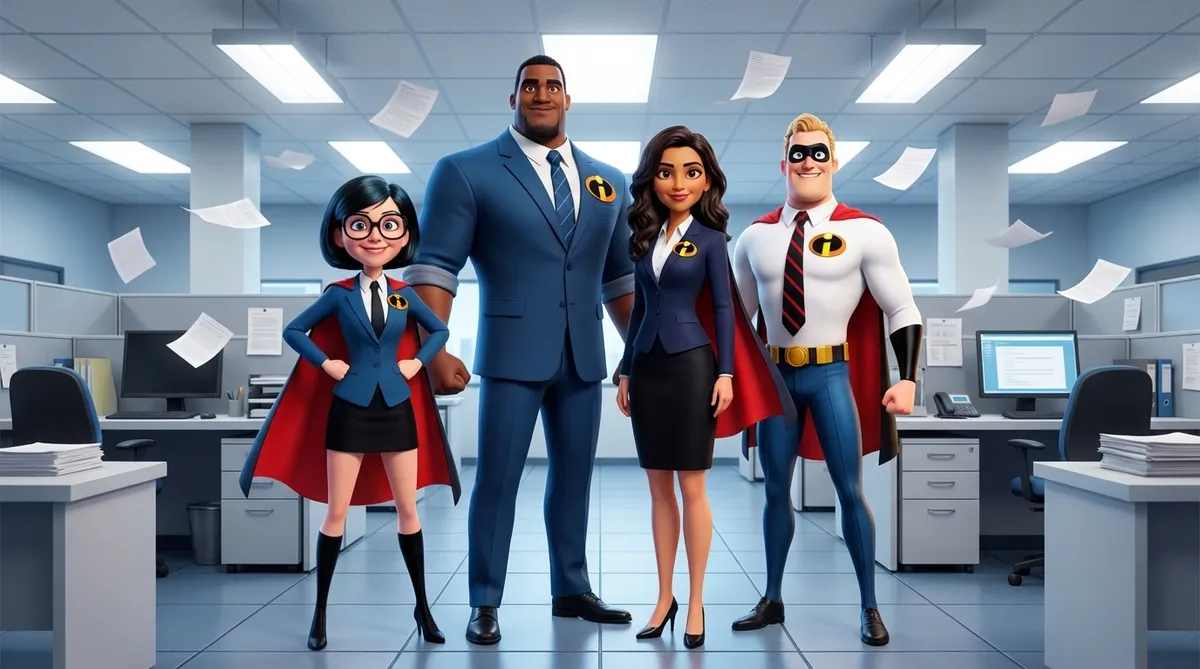
Every SME has one.The person who knows how things really work. The one who stays late to fix problems no system seems to catch. The unofficial glue holding operations together.They're often described as indispensable.That's exactly the problem.The Office Hero MythOffice heroes aren't a sign of commitment or culture. They're a symptom of broken or undocumented processes.When a business relies on individuals to compensate for unclear workflows, missing systems, or inconsistent decision-making, it quietly builds risk into everyday operations.Things keep moving — until they don't.How Office Heroes Are CreatedOffice heroes usually emerge when:Processes exist informally rather than explicitlyKnowledge lives in people's heads instead of shared systemsWorkarounds become normalisedGrowth outpaces structureOver time, the hero becomes the exception handler for everything the business hasn't properly designed.The Hidden Cost of Hero-Dependent Operations1. Single Points of FailureWhen one person understands a critical process end-to-end, absence becomes a risk. Holidays, illness, or resignation suddenly feel dangerous.That's not resilience. It's fragility.2. Inconsistent OutcomesIf results depend on who does the work rather than how the work is done, quality will vary. Customers notice this long before leadership does.3. Burnout and AttritionOffice heroes rarely complain — until they leave. At that point, the business discovers how much was being propped up manually.Replacing a hero often exposes how undocumented the work really was.4. Growth CeilingHero-based systems don't scale. You can't replicate intuition, memory, or goodwill at volume. Growth stalls because the business can't multiply its capability.Why SMEs Are Especially VulnerableSMEs grow fast, adapt constantly, and prioritise delivery. That agility is a strength — but without structure, it creates dependency.Common patterns include:Founders designing processes around themselvesEarly team members accumulating unspoken responsibility"Temporary" fixes becoming permanentTooling added without redesigning workflowsThe result is a business that looks busy but struggles to move cleanly.The Real Risk Leaders MissOffice heroes hide problems.Because things still get done, leadership assumes the system works. In reality, effort is masking inefficiency.This makes decision-making harder:Costs appear higher than expectedTimelines slip unpredictablyCapacity feels permanently stretchedAutomation fails because processes aren't stableBy the time the issue is obvious, the hero has usually gone.Moving From Heroics to Reliable SystemsThe goal isn't to eliminate dedication. It's to stop relying on it.Step 1: Map the WorkStart with processes where heroics are most visible. If someone is constantly asked for help, that's your signal.Map what actually happens — not what should happen.Step 2: Make Knowledge ExplicitDocument decisions, hand-offs, and exceptions. Anything that relies on memory should be treated as a risk.Step 3: Standardise Before You AutomateAutomation magnifies existing problems. Fix the process first, then decide where tools add value.Step 4: Share OwnershipProcesses should belong to roles, not individuals. That's how resilience is built.What Changes When You Get This RightSMEs that reduce hero-dependency typically see:Lower stress across teamsMore predictable deliveryFaster onboardingBetter use of technologyLeaders freed up to think strategicallyMost importantly, the business becomes easier to run.A Leadership Reality CheckIf your organisation would struggle without one or two key people, that's not loyalty — it's a warning.Office heroes don't build scalable businesses. Processes do.
FAQ
What is an "office hero" and why is it a risk?
An office hero is the person who keeps things running by knowing what the system does not capture. It feels like strength, but the knowledge lives in one head. When that person is on holiday, ill, or leaves, the process stops, and the business finds out how much was undocumented at the worst possible moment.
How do we reduce hero dependency without losing good people?
You are not removing the person, you are removing the single point of failure. Sit with them, record how the work really happens, turn the steps into a checklist anyone can follow, and let them own the improved version. Most heroes are relieved: it ends the constant interruptions.
How long does it take to document a critical process?
A single process usually takes a couple of hours to capture and a week or two of real use to refine. Start with the one that would cause the most damage if the person holding it were unavailable tomorrow.
This article was written by Peter Lowe. The ideas and opinions are his own; AI was used to assist with drafting and editing.