The Personalisation Myth — Why Most AI-Driven Marketing Still Misses the Mark
· By Peter Lowe
Category: Content
## Executive Summary
Personalisation is one of the most overused — and misunderstood — ideas in modern marketing.
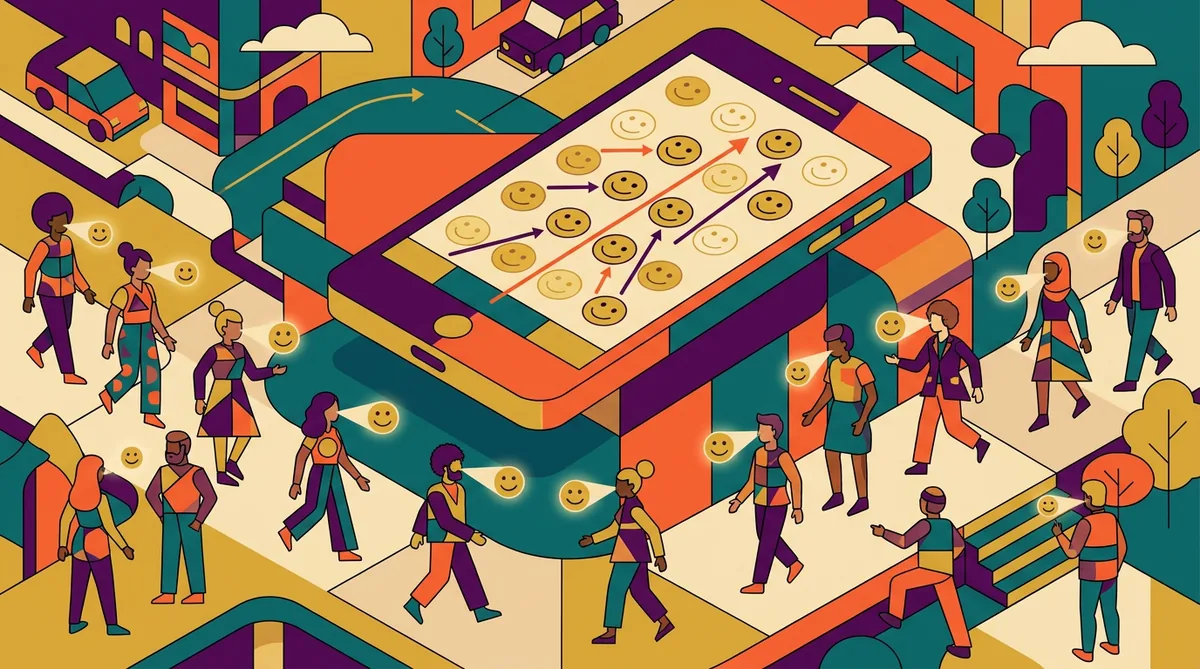
AI has made it easier than ever to personalise content, campaigns, and experiences. But AI personalisation, done badly, is just variation at scale.
But most businesses aren't getting better results.
Why?
Because they've confused personalisation with variation.
Changing a name, tweaking a headline, or segmenting an audience isn't personalisation.
It's surface-level activity.
Real personalisation is about relevance.
And relevance comes from understanding — not tools.
## The Problem: Most "Personalisation" Isn't Personal
On paper, it looks impressive.
- Segmented email campaigns
- Dynamic website content
- AI-generated variations of ads
- Personalised subject lines
But when you step back and look at the outcomes:
- Conversion rates plateau
- Engagement is inconsistent
- Messaging feels generic
I've seen this repeatedly working with SMEs and marketing teams.
There's a belief that more data + more AI = better personalisation.
In reality, most teams are just producing more versions of the same message.
That's not personalisation.
That's noise at scale.
**Position Statement:**
Personalisation isn't about variation. It's about relevance.
## Where It Breaks in Practice
Personalisation fails for predictable reasons.
### 1. Data without meaning
Most organisations have data — but it's fragmented, inconsistent, or outdated.
CRM says one thing.
Marketing platform says another.
Sales team has their own version of reality.
AI doesn't fix this.
It amplifies it.
If your data is messy, your personalisation will be irrelevant.
### 2. Segmentation instead of understanding
Traditional marketing groups people into segments.
AI allows you to go further.
But most teams don't.
They stop at:
- Industry
- Job title
- Location
That's not insight.
It's categorisation.
Real personalisation comes from understanding:
- What problem they're trying to solve
- Where they are in the decision process
- What risk they're trying to avoid
Without that, you're guessing.
### 3. No connection to commercial outcomes
This is the biggest issue.
Personalisation is often treated as a marketing tactic.
It's not.
It's a commercial lever.
If it doesn't improve:
- Conversion rates
- Lead quality
- Customer lifetime value
Then it's not working.
I've seen businesses invest heavily in AI tools for personalisation…
…and still struggle to answer a simple question:
*"Is this actually driving revenue?"*
👉 Read more: [AI in Marketing for SME Leaders — the full strategic view](/insights/ai-in-marketing-for-sme-leaders-strategy-risk-execution/)
## What AI Actually Enables (When Done Properly)
AI is incredibly powerful when applied to personalisation.
But only when it's grounded in strategy.
Used properly, it allows you to:
- Analyse behaviour in real time
- Predict intent
- Adapt messaging dynamically
- Deliver relevant experiences at scale
The key word is **relevant**.
Not different.
Not personalised for the sake of it.
Relevant to the individual, in that moment.
## The Shift: From Segments to Situations
Most businesses think in segments.
High-performing marketing teams think in situations.
Instead of asking:
*"Which segment is this person in?"*
They ask:
*"What situation are they in right now?"*
That changes everything.
Because situations are driven by:
- Context
- Intent
- Urgency
- Risk
And those are the things that drive decisions.
AI can help you identify and respond to those signals.
But only if you've defined what matters.
**Key Insight:**
Segments tell you who someone is. Situations tell you what they need.
## What Effective Personalisation Looks Like
When it's working, you'll see it clearly.
- Messaging that feels specific, not generic
- Content that answers real questions, not assumed ones
- Campaigns that adapt based on behaviour, not assumptions
- Clear improvements in conversion and engagement
This isn't about complexity.
It's about alignment.
Between:
- Data
- Messaging
- Customer need
- Commercial objective
👉 Read more: [Scaling content with AI — faster doesn't mean better](/insights/scaling-content-with-ai-faster-doesnt-mean-better/)
## A Practical Example (From Experience)
I worked with a business that had invested heavily in marketing automation and AI-driven email campaigns.
On the surface, everything looked advanced.
Multiple segments. Automated journeys. Personalised emails.
But performance had stalled.
When we dug into it, the issue was simple:
They were segmenting by job title — not by problem.
So every message was technically "personalised"…
…but commercially irrelevant.
We reworked the approach around:
- Key pain points
- Decision triggers
- Stage in the buying journey
No new tools.
Same data.
Just better thinking.
The result:
- Higher engagement
- Better quality leads
- Clearer pipeline progression
That's what real personalisation looks like.
## The Commercial Reality for Leaders
If you're leading a business or marketing function, personalisation isn't a feature.
It's a performance driver.
Done properly, it should:
- Reduce wasted spend
- Improve conversion rates
- Increase ROI on campaigns
Done poorly, it does the opposite.
More content.
More targeting.
More cost.
Same results.
AI won't change that on its own.
## The Practical Starting Point
Before investing further in AI personalisation tools, ask:
1. Do we understand our customers' real problems?
2. Is our data consistent and connected?
3. Are we measuring personalisation against revenue outcomes?
4. Do we know what "relevant" looks like for our audience?
If the answer is no to any of these, that's your starting point.
Not another tool.
## FAQs
### What's the difference between personalisation and segmentation?
Segmentation groups people by shared attributes — industry, role, company size. Personalisation responds to the individual situation: what problem they're trying to solve, where they are in the decision process, what's prompting them to act now. Most teams think they're personalising when they're actually just segmenting at higher resolution. Twenty segments instead of five doesn't make it personalisation. It just makes the categorisation finer.
### Where should we start if our customer data is fragmented across systems?
Start by mapping it. Before any AI personalisation investment, document where customer data lives, who owns each source, and how the systems connect — or don't. Most SMEs have data sitting in three to five places: CRM, marketing platform, sales notes, support system, finance. The work is connecting them around a single view of the customer. AI personalisation built on disconnected data doesn't fail loudly. It just personalises with the wrong information.
### Does personalisation work for B2B, or is it primarily a B2C tactic?
It works for both — and the B2B case is often stronger. B2B decisions are higher-value, longer, and more complex. Relevance matters more, not less. The mistake B2B teams make is assuming personalisation means consumer-style tactics like product recommendations. In B2B, personalisation looks like content that addresses the specific stage of the buying decision, the specific risk being managed, or the specific stakeholder being convinced.
### How do we measure whether personalisation is actually working?
Tie it to revenue, not engagement. Open rates, click-throughs, and time-on-page can all improve while pipeline stays flat. The metrics that matter are conversion rates by segment or situation, lead quality, sales cycle length, and revenue per customer. If personalisation is working, those numbers move. If it isn't, no amount of engagement metrics will compensate.
### Can small businesses do AI-driven personalisation without big tech budgets?
Yes — often more effectively than larger competitors. Big budgets buy more tools. They don't buy more understanding. Most SMEs have a critical advantage: direct customer relationships, smaller and more knowable audiences, and faster feedback loops. The work isn't expensive. It's clarity work — about who you serve, what they actually need, and how to deliver relevance consistently. AI then scales that, even on modest budgets.
## Conclusion
Personalisation isn't about technology.
It's about understanding.
AI gives you the ability to scale that understanding.
But it doesn't create it.
The businesses that win with AI-driven marketing won't be the ones with the most advanced tools.
They'll be the ones that know their customers best.
## Suggested Actions
- Audit your current personalisation — what's truly personal vs. cosmetic variation
- Identify where messaging assumes customer needs rather than reflects them
- Map customer situations, not just segments
- Connect your data sources before scaling AI personalisation
- Use AI to scale understanding — not substitute for it
## Final Thought
Personalisation isn't about being clever.
It's about being relevant.
This article was written by Peter Lowe. The ideas and opinions are his own; AI was used to assist with drafting and editing.