The Subscription Graveyard: Why AI Tools Go Unused
· By Peter Lowe
Category: Automation
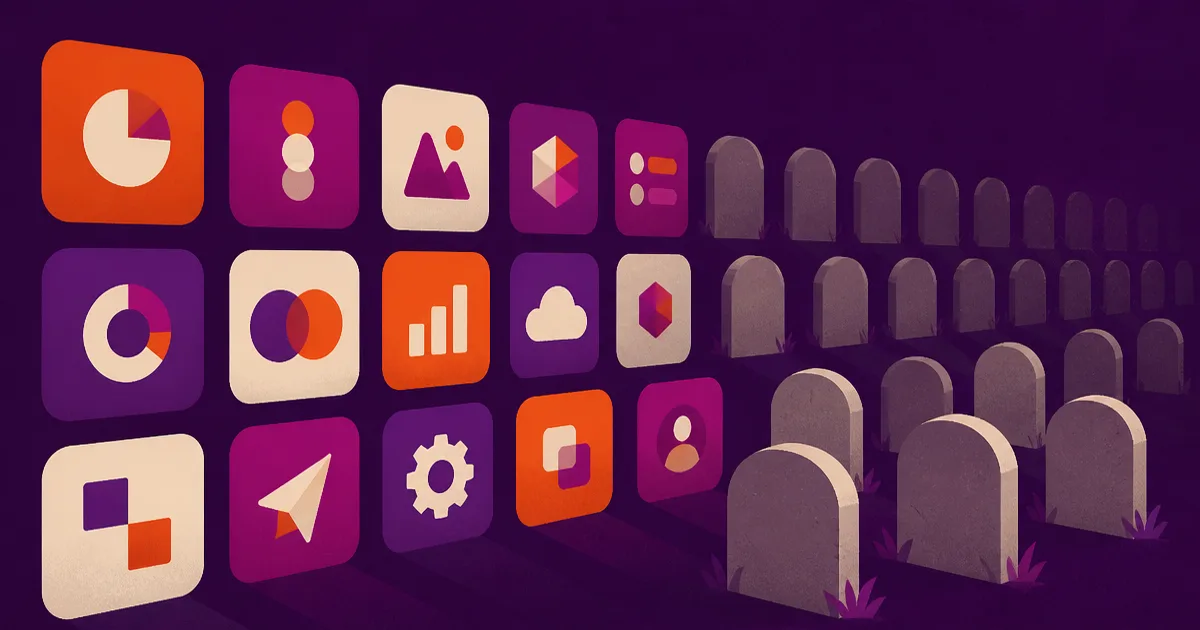
Every business more than a couple of years old has one. A graveyard of subscriptions — tools bought in a burst of enthusiasm, used properly for about three weeks, now sitting as a monthly line item nobody quite gets round to cancelling. The project management app you were all going to live in. The CRM half the team never opened. The clever bit of software someone demoed brilliantly, that solved a problem you were sure you had, and then somehow didn't stick.
The usual conclusion is that the tool didn't work, or that you're just bad at this — no discipline, forever chasing the shiny thing. Neither is quite right, and both are unfair. Tools very rarely end up in the **software subscription graveyard** because they were bad tools. They end up there because of everything that happened around them. Or rather, didn't.
## It's almost never the tool
A tool is a way of doing something. Buying it doesn't change how you do the thing — it just gives you the option to. The change is a separate piece of work, and it's the piece that almost always gets skipped.
Most graveyard tools were bought at a moment of pain, to make the pain stop. The inbox was chaos, the pipeline was invisible, the files were everywhere — and something appeared that promised to fix exactly that. So it got bought. But "the inbox is chaos" isn't a defined problem, and "buy this app" isn't a defined solution, and nobody paused to say what "fixed" would actually look like. Without that, there was never any way to tell whether the tool was working — only a vague sense, a few weeks in, that things didn't feel different enough to justify the faff. And so, quietly, everyone drifted back to the old way.
## Why good tools end up in the graveyard
The same handful of reasons come up again and again, and not one of them is a character flaw.
The tool got bolted on without changing the process. It became an extra thing to update on top of the old way of working, rather than a replacement for it — so using it was more work, not less, and people did the sensible thing and stopped. It's the same failure as [Automate a Broken Process, Break It Faster](/insights/automate-broken-process-break-it-faster/).
Nobody owned it. It was everyone's to use and no one's to run. The person who championed it got busy, or moved on, and with them went the only gravity holding it in place.
Nobody budgeted for the learning curve. Every new tool costs you time before it saves you any, and that dip felt like failure rather than the normal price of adoption — so it got dropped right before it would have started paying off.
And often there were simply too many at once. Every new subscription competes for the same scarce thing, which is your team's attention, and you can only really change how you work in one or two places at a time. Buy five tools in a quarter and you've guaranteed four of them a plot in the graveyard.
Underneath all of it is the same imbalance that runs through this whole series: buying is quick, hopeful and satisfying; adoption is slow, dull and ongoing. The credit card is the easy half. The change is the hard half — and the hard half was always the point.
## What good adoption looks like
Businesses that don't build graveyards tend to do a few unremarkable things before they buy anything.
They define the problem first, and what "working" would look like — specifically enough that in a month they can say yes or no, this is better. They decide what the tool replaces, and then they actually stop doing the old thing, so it's a swap and not an addition. They give it an owner: one person responsible for it being used, not just installed. And they budget time for the awkward early phase, accepting that a tool costs before it pays. Mapping the workflow first, as in [Office Heroes & Broken Processes](/insights/office-heroes-broken-processes/), makes all four easier.
The other quiet discipline is doing less. One tool, properly adopted, beats three bought on a hunch and half-used. If you're already running a graveyard, the healthiest thing you can do is walk through it: cancel everything genuinely dead — that's money back in your pocket today — and, for the one or two tools that might still be worth it, restart them properly, with a problem defined, a process change decided, and someone's name against them.
## The order that actually works
So the honest post-mortem on a dead subscription almost never ends at "bad tool." It ends at "we never defined what we wanted, never changed how we worked, and never gave it to anyone to own." Which is good news, in its way — because those are all things you can fix, and none of them means buying anything else. Our [Automation & Workflows](/services/automation-workflows/) work starts exactly there.
The verdict on this one: the tool was never really the problem. Define the outcome, change the process, give it an owner — and either the tool finally does what you hoped, or you realise, cleanly, that you never needed it. Either way, the graveyard is telling you something worth hearing.
## Frequently asked questions
### Why do so many software subscriptions end up unused?
Rarely because the tool was bad. A tool only gives you the option to work differently — the actual change in how people work is separate work that usually gets skipped. Without a defined problem, an owner and a process change, the tool quietly falls into disuse.
### How do I stop buying tools that end up in the graveyard?
Before buying, define the problem and what "working" looks like, decide what the tool replaces and actually stop doing the old thing, give it a single owner, and budget for the learning curve. And buy fewer at once — one properly adopted tool beats three half-used.
### What should I do with the subscriptions already gathering dust?
Walk through the graveyard. Cancel everything genuinely dead to get that money back now. For the one or two that might still be worth it, restart them properly — a defined problem, a decided process change, and someone's name against each.
If you're ready to understand where AI can genuinely save you time, reduce friction and create real capacity in your business — without automating a guess — we're happy to talk it through. [Book a discovery call](/contact/) and we'll look at your situation honestly.
*Peter Lowe — AI Consultant and Founder, Smart AI Studio.*
This article was written by Peter Lowe. The ideas and opinions are his own; AI was used to assist with drafting and editing.