The Jobs Worth Handing to AI (and Which Aren't)
· By Peter Lowe
Category: Strategy
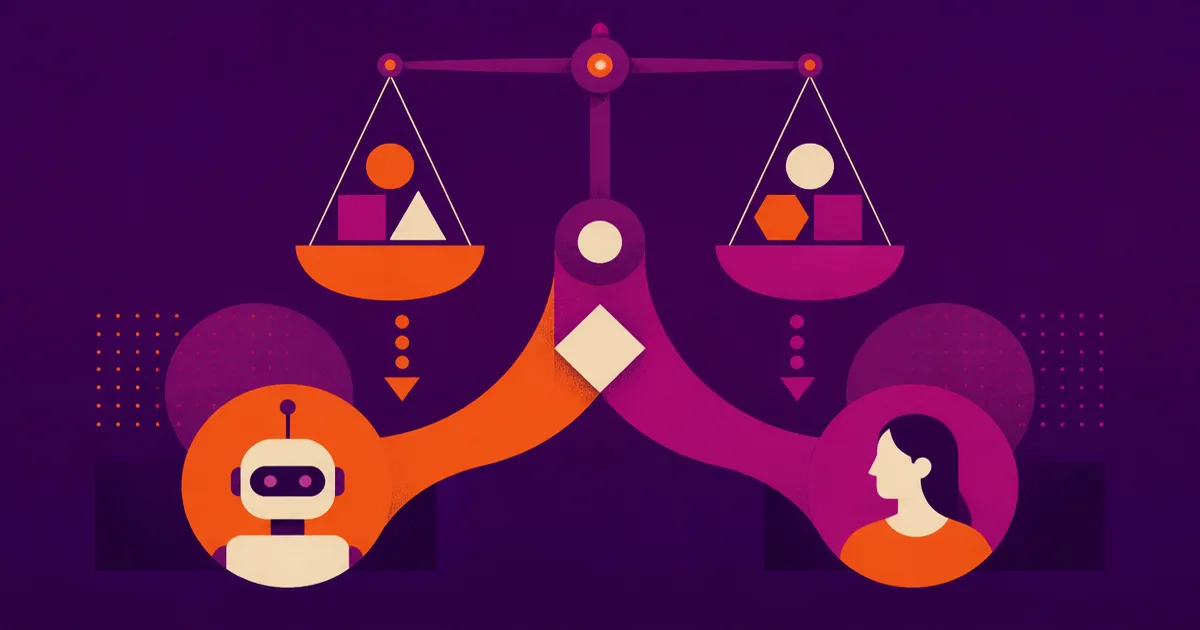
For a long time the question about AI was "can it do this?" That question has quietly stopped being useful, because the answer is now "it'll have a go at almost anything." Ask it to write your emails, analyse your accounts, draft a contract, diagnose a symptom, plan your week — it produces something confident and plausible for all of them. What it won't tell you is which of those you should actually have trusted it with.
So the useful question isn't what AI *can* do. It's what you should hand over, what you should keep, and how to tell the difference before it costs you something. Working out the **jobs worth handing to AI** comes down to a fairly simple test.
## The two questions that actually decide it
When you're deciding whether to hand a job to AI, two questions do almost all the work.
First: if it gets this wrong, how bad is that? A duff first draft of a LinkedIn post costs you nothing — you bin it and try again. A wrong number in a client proposal, a wrong clause in a contract, a wrong thing said to a customer in your name — those cost real money, or trust, and some of them you can't take back.
Second: would you even notice if it was wrong? This is the one people forget, and it's the more dangerous of the two. AI's failure mode isn't going quiet or throwing an error. It's being confidently, fluently wrong — producing something that looks every bit as polished as when it's right. If you can read the output and tell good from bad instantly, you're safe. If you can't — because it's a legal clause you couldn't draft yourself, a statistic you've no way to check, code you can't read — then you're trusting something you have no means to verify, and the sheer confidence of it will talk you into believing it.
Put those two together and the map more or less draws itself. Low cost if it's wrong, and easy to check: hand it over. High cost, or you can't tell whether it's right: don't — at least not without a human who can. It pairs neatly with [Where Not to Automate](/insights/where-not-to-automate-decision-framework-sme-leaders/).
## The jobs worth handing over
Plenty of work sits squarely in the safe corner, and for that, AI is a real gift to a stretched team.
First drafts of almost anything — emails, posts, outlines, proposals — where you're going to read and shape the result anyway. Summarising a long document, or a fortnight of messages, down to the parts that matter. Reading across your own data to find patterns, as covered in [You're Sitting on the Customer Data You Keep Buying](/insights/customer-data-analysis/). Reformatting, tidying, restructuring. Brainstorming twenty options so you can pick three. The routine, repetitive, rules-based steps in a process you've already cleaned up. Answering the stable, factual questions customers ask over and over.
What these have in common is that a wrong answer is cheap and obvious. You can see the bad draft. You can feel the summary that missed the point. The stakes are low and the checking is instant — which is exactly the corner where you should be leaning on AI hard.
## The ones that aren't — and the trap in the middle
At the other end are the jobs to keep, and it isn't always because AI can't do them. It's because being wrong is expensive, or the whole point of the task is human.
Anything that goes out in your name without you reading it. Final figures, quotes and invoices. Legal, tax, financial or medical specifics you can't personally verify. The sensitive conversations — the apology that matters, the difficult client call, letting someone go. The genuinely strategic decisions about where the business goes next. Some of these need a human because the accountability has to be yours, some because the relationship is the job, and some simply because the cost of a confident error is too high to gamble on.
But the real danger isn't either end. It's the middle — the jobs where AI produces something that looks right and you can't easily tell that it isn't. A statistic with a plausible source that was never published. A contract clause that reads like law and means nothing. Copy claiming a benefit your product doesn't actually have. Code that runs cleanly and does the wrong thing. This is where people get burned, because nothing looks broken. The output is fluent, formatted and confident, and quietly wrong in a way you'll only discover when it matters. If a task lives in that middle, the answer isn't to trust it or to avoid it. It's to get a human who *can* check it involved before it goes anywhere.
## The answer isn't "never," it's "supervised"
None of this means keeping AI away from anything that matters. It means matching how much you lean on it to how much a mistake would cost, and how easily you'd catch one.
For high-stakes work, the move is to use AI as the assistant and keep yourself as the authority. Let it draft the contract, then have someone who understands contracts check it. Let it pull the numbers together, then verify them before they reach the client. Let it propose the strategy, then bring your own judgement — and your years of knowing this business — to bear on whether it holds up, the point of [35 Years of Judgement Doesn't Fit in a Prompt](/insights/judgement-doesnt-fit-in-a-prompt/). The tool does the legwork; the human keeps the accountability. Used that way, AI speeds up even the serious jobs without you handing over the thing you can't afford to get wrong.
The verdict on this one isn't "use AI" or "don't." It's a line you can draw yourself, task by task: how bad is it if this is wrong, and would I notice? Hand over the cheap-to-check and the low-cost. Keep, or closely supervise, the expensive and the unverifiable. The skill isn't using AI for everything, or refusing it on principle — it's knowing which of those jobs you've got in front of you. That's exactly what we help with in [AI Strategy & Roadmap](/services/ai-strategy-roadmap/).
## Frequently asked questions
### How do I decide which jobs are worth handing to AI?
Ask two questions of each task: if AI gets it wrong, how bad is that, and would you even notice? Low cost and easy to check means hand it over. High cost, or you can't tell whether it's right, means keep it — or supervise it closely.
### What's the most dangerous kind of AI task?
The middle ground — work that looks right but you can't easily verify. A plausible but invented statistic, a contract clause that reads like law and means nothing, code that runs but does the wrong thing. Nothing looks broken, so the error surfaces only when it matters.
### Does keeping high-stakes work mean avoiding AI entirely?
No. It means supervised use: let AI do the legwork — drafting, pulling numbers, proposing options — then have a human who can actually check it keep the accountability. That speeds up serious jobs without handing over the part you can't afford to get wrong.
If you're ready to understand where AI can genuinely save you time, reduce friction and create real capacity in your business — without automating a guess — we're happy to talk it through. [Book a discovery call](/contact/) and we'll look at your situation honestly.
*Peter Lowe — AI Consultant and Founder, Smart AI Studio.*
This article was written by Peter Lowe. The ideas and opinions are his own; AI was used to assist with drafting and editing.