The Rise of AI Workslop: Are You Throwing Slop Grenades?
· By Peter Lowe
Category: Readiness
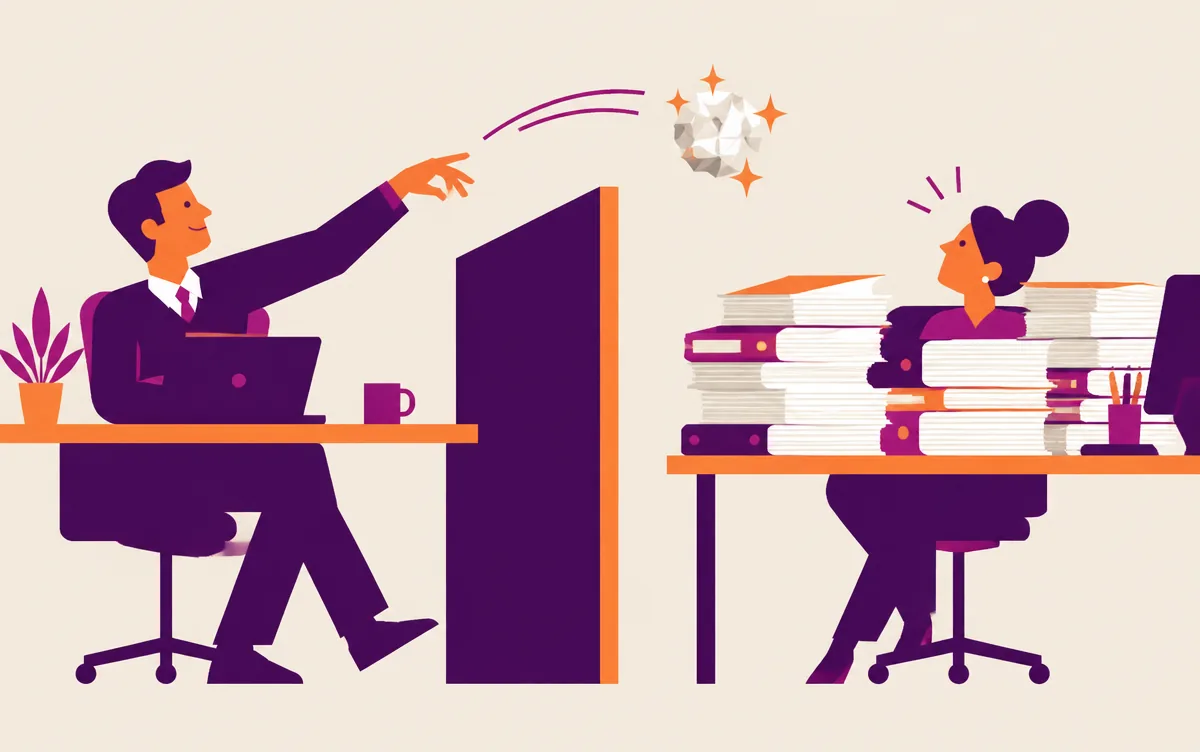
Most teams now have someone who can produce a four-page document in the time it takes to boil a kettle. It's well formatted, confidently written and has proper headings. It is also, on a second read, not quite right. A link goes nowhere. A figure doesn't match last month's report. The recommendation answers a question nobody asked.
Researchers at BetterUp Labs and Stanford's Social Media Lab have a name for this: workslop. It's AI output that looks like finished work but lacks what would make it useful, so the person who receives it has to do the thinking the sender skipped. Shopify's chief executive, Tobias Lütke, reportedly has a blunter name for it. He calls them slop grenades: work lobbed at a colleague, who then has to deal with the blast.
Slop grenades rarely come from lazy people. They usually come from busy people who've been told to use AI more, and who are doing exactly that.
## Why AI workslop is spreading
Lütke is an interesting person to be raising this. According to Fortune, he told Shopify staff last year that AI use was a baseline expectation. Now he's describing the side effect.
Camunda's new report, *The AI Process Gap*, puts numbers on the pattern. It surveyed 1,000 process decision-makers and 5,000 employees at organisations with more than 1,000 staff, across the US, UK, Germany and France, in July and August 2026. Several of the employee findings read like slop grenades seen from the receiving end. Around a quarter (24%) say they spend time fixing AI-generated work passed to them by colleagues. A third say AI has increased their workload rather than reduced it. And 41% admit using AI simply to comply with their organisation's AI mandate when there was no need to.
Leaders see it differently. In the same research, 89% of leaders say AI is making their teams more productive, against 64% of employees. That gap is where slop grenades live. The manager sees usage going up. The person three desks away sees their Tuesday afternoon disappear into rework.
A word of caution. Camunda sells process orchestration software, and the report closes with a product pitch. Its respondents work in large enterprises, not twenty-person firms. Take the direction seriously and treat the exact percentages as indicative. That direction matches what I see in smaller businesses: when AI is bolted onto work without anyone deciding how it should fit, somebody further down the line pays for it.
## Stop counting usage
If your team is judged, formally or not, on how much they use AI, you'll get more AI output. Whether you get better work is a separate question, and usage figures won't answer it.
Drop any target, league table or offhand comment that rewards volume. Replace it with one question you ask about real pieces of work: did this save the person who received it any time?
## Make the sender own it
The simplest rule I know: if your name is on it, you've read it. All of it, before it leaves your hands.
That sounds obvious, but a slop grenade depends entirely on skipping that step. Lütke's complaint, as Fortune reports it, was that people weren't reading what they sent and were leaving colleagues to find the problems.
So make it explicit. Agree as a team that anything drafted with AI is checked by the sender before it reaches anyone else, and that "the AI wrote it" never explains an error. For anything that matters, such as a proposal, a price or a policy, add a line at the top saying what you've verified. "Figures checked against the March invoice run" takes ten seconds to write and saves your reader from redoing it.
## Brief for the reader
A lot of workslop is simply too long. AI will happily turn three points into a missive, and the reader has to dig the three points back out.
Before anyone prompts, they should be able to say who will read this and what that person needs to decide or do. Put both into the brief, and set a length. If a colleague needs a yes or no on a supplier, they need a paragraph, not a report with an executive summary.
## Fix the handoff, not just the habit
This is where the Camunda research earns its place. Its argument is that most processes were designed for people passing work to people, and AI gets dropped into the middle without anyone redesigning the steps around it. In its survey, 44% of employees said they'd manually overridden AI outputs because the underlying process wasn't set up correctly, and 30% said they had to re-enter or move data between steps the AI couldn't connect.
You don't need a transformation programme to act on that. Pick one recurring piece of work where AI is already in use: a monthly client report, quote preparation, job sheets. Sit down with the people who do it and [trace who hands what to whom](/services/process-mapping/). Then decide where AI drafts, which named person checks, and what "checked" actually means. Write it on one page and pin it somewhere people will see it.
## Ask the people doing the work
Camunda found that 69% of employees weren't fully consulted about how AI would be used in their day-to-day work. In a large enterprise that's a structural problem. In an SME it's usually a conversation nobody has got round to.
Have it. Ask your team where AI output lands on their desk and costs them time, and where it genuinely helps. You'll probably hear about the same two or three slop grenades from several people. Those are your first fixes.
## Know the warning signs
Workslop builds up before anyone names it. Watch for colleagues redoing each other's work without saying so, documents getting longer while decisions get slower, and people double-checking outputs because they've been caught out before. None of that shows up on a usage dashboard. All of it shows up if you ask.
## What good looks like
None of this is an argument for using less AI. It's an argument for using it where it takes work off someone's plate instead of moving it to the next desk.
Small teams have a real advantage here. Camunda's enterprise respondents estimated it would take around four years on average to adapt their most important processes for AI. A founder with fifteen people can agree a sender-owns-it rule on Monday, map one handoff by Friday, and know within a month whether rework has fallen. When it works, AI drafts arrive ready to use, colleagues stop second-guessing each other, and the time savings you were promised start turning up where they count.
Once you've agreed the rules, the next step is giving your team the kit to follow them. That's the subject of the sister piece: [AI Training or AI Enablement? How to Stop the Workslop at Source](/insights/ai-training-vs-ai-enablement/).
If you'd like a hand putting these rules in place, [get in touch](/contact/) — happy to walk through your situation.
## FAQs
### What is AI workslop?
AI workslop is AI-generated work that looks polished and complete but lacks the accuracy, context or substance to move a task forward. The term comes from researchers at BetterUp Labs and Stanford's Social Media Lab. The cost falls on whoever receives it, because they have to check, correct or redo it.
### What is a slop grenade?
"Slop grenade" is a phrase reportedly used by Shopify CEO Tobias Lütke for unexamined AI-generated work, such as emails or code, passed to colleagues who then have to deal with the problems in it. It's workslop described from the receiving end.
### How can a small business reduce AI workslop?
Stop rewarding AI use for its own sake. Make the sender responsible for checking anything AI-drafted before it goes to a colleague. Brief AI with the reader and a length in mind. Map one recurring process to decide where AI drafts and where a named person checks. Then ask your team where AI output is costing them time.
### Does AI workslop mean AI isn't worth using?
No. It usually means AI was added to work without anyone deciding how it should fit. Camunda's 2026 *AI Process Gap* report found 65% of employees at large organisations believe they could use AI much more effectively if it were implemented differently. The fix tends to sit in the process and habits around the tool.
This article was written by Peter Lowe. The ideas and opinions are his own; AI was used to assist with drafting and editing.